Contents
- Introduction
- What the 6-month IANG application window is
- Determining the graduation date: certificate date and certification letter
- Filing within the window: strategy and required documents
- Activating the visa after approval: process and time limits
- Missing the window and the returning non-local graduate route
- Practical advice and common pitfalls
- Conclusion
Introduction
According to Immigration Department statistics, 10,391 people were approved to stay in Hong Kong in 2022 under the Immigration Arrangements for Non-local Graduates (IANG), an increase of over 30% compared with 2021. Every one of these thousands of graduates from Hong Kong institutions faces the same gate in time — the 6-month application window counted from the graduation date. File within that window and you need no job offer in advance: you are granted 24 months’ stay with no restriction on changing employers. Delay, and you must first secure employment, while both the threshold and the processing time multiply. Taking the Immigration Department’s current policy provisions as the yardstick, this article unpacks how that 6-month window starts, how to file within it, and when to activate the visa, so that graduates can position themselves precisely to remain in Hong Kong.
What the 6-month IANG application window is
Under the Immigration Ordinance (Cap. 115) and the Immigration Department’s guide to the Immigration Arrangements for Non-local Graduates (policy page), non-local graduates are divided into two categories, “fresh” and “returning”, and the dividing line turns entirely on a single date: the graduation date. The Immigration Department defines it clearly:

“A non-local fresh graduate who submits an application for employment in Hong Kong to the Immigration Department within six months from the date of graduation (i.e. the date stated on the graduation certificate) falls within the non-local fresh graduate category. … A non-local returning graduate refers to a person who submits an application after six months from the date of graduation.” (Notes for Guidance for Form ID(E) 990A, download form)
In other words, an application that reaches the Immigration Department within 183 days of the day after the graduation date (calculated by the calendar) enjoys “no job offer required” status, and on approval receives directly an initial stay of 24 months (extended from the original 12 months with effect from 28 December 2022). Filing after 6 months means meeting the “employment secured” condition, and the post must normally be one filled by a degree holder, with remuneration and benefits at market level. The Immigration Department allows no discretionary extension; the relevant time limit is governed by the date the application is actually received (by postmark for postal submissions, by system record for online submissions).
Put differently, these 6 months are a one-way valve on fresh graduate status. Once it closes, you must take another, narrower route — as a non-local returning graduate — to apply to stay. On 2022 figures, 9,947 applications were approved in the fresh category against just 444 in the returning category, a gap of more than 22 times, which underlines just how critical the window is.
Determining the graduation date: certificate date and certification letter
Applicants commonly confuse the “graduation date” with the date of the graduation ceremony or the date of the final examination. The “graduation date” adopted by the Immigration Department is determined in the following order:
- The date stated on the graduation certificate (Date of Award / Conferment). This date is set by the university’s senate and usually falls in July, November or the following March. Taking the University of Hong Kong as an example, the formal conferment date for its 2023 undergraduate degrees was 15 November 2023, while the ceremony was held in December. Holding that certificate, the window runs from 15 November 2023 to 15 May 2024.
- The graduation certification letter or course completion letter (Letter of Certification / Testimonial). Those who have not yet collected their certificate may apply on the strength of a letter issued by the institution, which must state the Programme Completion Date. The Immigration Department will treat that completion date as the graduation date, even if the certificate bears a later date. For example, a certification letter issued by City University in June 2023 stating a completion date of 15 June 2023 starts the window on 15 June 2023 and runs it to 15 December 2023, without waiting for the November certificate.
- The earlier-date principle: if the certificate date is earlier than the completion date on the certification letter (rare), the certificate prevails; if the completion date on the certification letter is earlier than the certificate date, the certification letter prevails. This point is noted in Immigration Department FAQ 19.
Graduates should therefore contact their institution’s Registry as a first step to obtain a graduation certification letter, and verify the completion date it states. Taking first-term graduates of the 2022-23 academic year at the Chinese University of Hong Kong as an example, some students were able to obtain a certification letter in late January 2023 showing a completion date of 15 January 2023, giving a window running to 15 July 2023 — nearly five months more than waiting for the June certificate before applying. Wait until the certificate is issued and more than half the window has already been consumed.
In practice, at some institutions such as the Hong Kong University of Science and Technology, the programme completion date and the certificate date may be the same day, 31 May, so the window runs from 31 May to 30 November. Establishing your own institution’s conferment date practice is therefore the first step in launching the application with precision.
Filing within the window: strategy and required documents
Once the graduation date is confirmed, the second core task is to file a complete application before the 6-month deadline. The Immigration Department accepts two modes of submission:
- Online submission: filing through the GovHK “Immigration Department Online Services” platform, where the system records the submission date in real time and removes the risk of postal delay.
- In person or by post: completing Form ID 990A and delivering it with the supporting documents in person to Immigration Department headquarters or the relevant branch office, or posting it to “2/F, Immigration Tower, 7 Gloucester Road, Wan Chai, Hong Kong”. Postal submissions are timed by the postmark date; to guard against misdelivery, use registered post or a courier and keep proof of posting.
Whichever route is used, submission must be completed before the window closes. Because the Immigration Department may adjust its service hours over Chinese New Year, Easter or Christmas, you are advised to file at least 20 working days before the deadline, leaving a buffer for supplementary documents.
The list of documents that must be submitted (with reference to the ID 990A form guide) includes:
- a completed and signed application form ID 990A;
- one recent photograph (affixed to the first page of the form);
- a copy of a valid travel document (such as the Exit-Entry Permit for Travelling to and from Hong Kong and Macao and the relevant endorsement);
- a copy of the Hong Kong Identity Card (if held);
- a copy of the graduation certificate or graduation certification letter;
- a copy of the full academic transcript;
- proof of financial means showing sufficient funds to live in Hong Kong (generally suggesting no less than HK$100,000, with bank statements for the past 3 months);
- proof of accommodation (tenancy agreement or hostel residence proof).
Fresh applicants need not submit an employment contract, but must ensure that the course studied was full-time, locally accredited, and at bachelor’s degree level or above. Part-time study and exchange programmes do not qualify for IANG.
A visa fee of HK$230 is payable on collection. The Immigration Department undertakes that, once all documents are received, processing is generally completed within 4 weeks. June to August is a peak application period, when processing may stretch slightly to 6 weeks.
Activating the visa after approval: process and time limits
Once the application is approved, the Immigration Department issues an “entry permit label” (visa/entry permit label), which must be affixed to the travel document. Mainland residents must also use this label to apply to the exit-entry administration department of the mainland public security authority for a “stay endorsement for travelling to and from Hong Kong and Macao” (D endorsement). Two critical time limits arise during activation:
- The last date of entry on the label: the label will state a “Last Date of Entry”, normally 3 months after issue. The applicant must enter Hong Kong on or before that date; otherwise the label lapses and a fresh application must be filed.
- The start of the first limit of stay: 24 months’ stay is granted counting from the day of arrival at immigration control. During this period you may change jobs freely without notifying the Immigration Department.
Because the activation date can be chosen at any point before the last date of entry, graduates can schedule their arrival strategically. For example, a student certified as graduating in July may be issued a label in early September with a last date of entry in early December; if that student wishes to remain in Hong Kong until a particular year in order to connect with the seven years of residence required for permanent resident status, they can defer entry and activation to late November, so that the 24-month limit of stay runs through to late November two years later, maximising the total period of residence.
Note that fresh graduate status depends solely on the date of submission, not the date of activation. Provided the application is filed within 6 months, fresh status is unaffected even if activation falls outside the window.
Missing the window and the returning non-local graduate route
Failing to file within 6 months of the graduation date strips the applicant of fresh graduate status, and they must apply through the “non-local returning graduate” route (the same Form ID 990A). Its core condition is: at the time of submission the applicant must already have secured employment with a Hong Kong employer, and the work must normally be that of a degree holder, with remuneration and benefits at market level; additional documents such as a copy of the employer’s business registration certificate and proof of financial position must also be submitted (policy requirements). Processing generally takes 4 to 8 weeks, longer than for the fresh category.
The figures reflect how few approvals the returning category attracts — just 444 in 2022, against 9,947 in the fresh category, a stark disproportion. One reason is the need to have a job first; another is that the employer must cooperate in providing detailed information, and many small and medium-sized enterprises are deterred by that paperwork burden.
If 6 months have passed since graduation and no qualifying job has been found, the applicant may leave Hong Kong and apply later under the returning category once a suitable post is secured. Another option is to take a further full-time course at bachelor’s degree level or above, which restores fresh status on graduation. Note, however, that a second IANG application starts the window from the new graduation date, and the whole process means at least another year of time and tuition fees.
Practical advice and common pitfalls
- Mistaking the graduation ceremony date for the graduation date: if the university holds its ceremony in December 2024 but the certificate is dated November 2023, the window has long since closed. Always check the formal date on the certificate or certification letter.
- Delaying while waiting for the original certificate: some courses are held up by supervisor review or grade review, and the window can be eaten up quickly. Apply for a graduation certification letter immediately rather than waiting for the certificate.
- Insufficient validity on the travel document: if the Exit-Entry Permit for Travelling to and from Hong Kong and Macao has less remaining validity than “last date of entry + 24 months”, the issue of the D endorsement may be affected. At least 2.5 years of remaining validity is recommended.
- Weak proof of funds: the Immigration Department often requires evidence that the first 6 months of living costs can be met, and bank statements should show stable balances. Applications have been held up for supplementary documents where a single large deposit appeared with no explanation of its source.
- Ignoring the confirmation after online submission: the system sends a confirmation email, which should be printed or screenshotted and kept as proof of timely filing.
- Overlooking peak application periods: June to August each year is the peak for fresh graduate applications, and Immigration Department resources are stretched. It is better to file early in May or defer to early September to avoid the backlog.
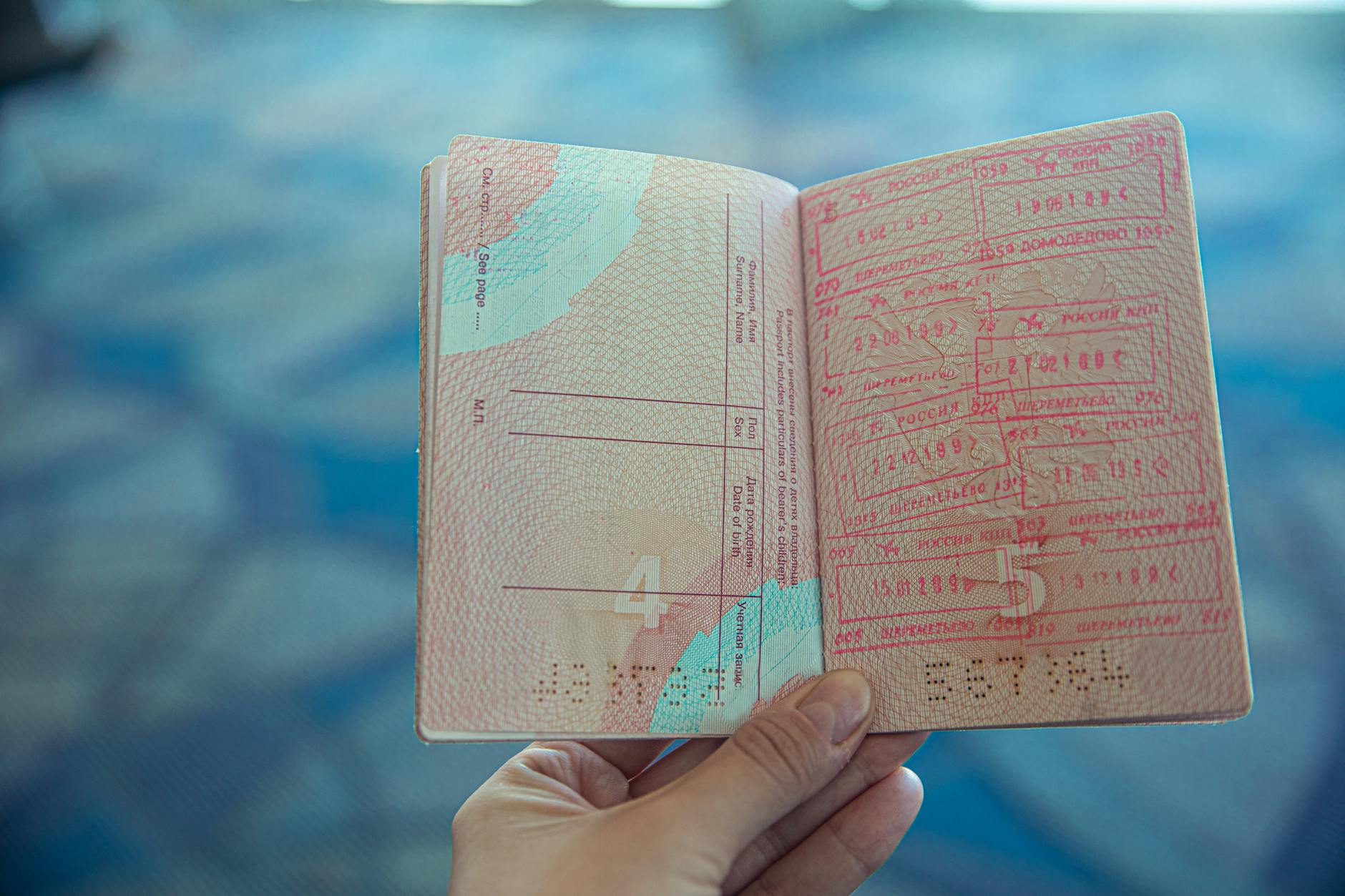
In addition, the Immigration Department upgraded its online application platform in November 2023, adding an application status tracking function: applicants can log in to check progress, respond promptly to requests for supplementary documents, and shorten the processing cycle.
Conclusion
The 6-month IANG window is the critical valve through which fresh graduates move from student status to Hong Kong resident. Pinning down the graduation date precisely, obtaining a certification letter in time, and scheduling submission and activation strategically: combine all three and you secure 24 months’ right to develop in Hong Kong with no employment burden at all. Miss it, and you face the pressure of job hunting and the stricter scrutiny of the returning category. The provisions and figures cited in this article are current as at 2024, are for information only, and do not constitute legal advice. Applicants should still read the Immigration Department’s official announcements themselves and consult a licensed legal adviser where necessary. The clock on the window has been counting down since that date printed on the certificate or certification letter.
Turn this guide into your next step
If you are comparing visa routes, budgets or timelines, email us a question. We point you to public policy sources such as the Immigration Department.