Contents
- Introduction
- I. The Legal Watershed of the Right of Abode: The Crucial Difference Between Chinese and Non-Chinese Nationals
- II. The Practical Operation and Calculation Pitfalls of the 36-Month Countdown Mechanism
- III. The Risk of a Broken Document Chain for Chinese Permanent Residents: The Critical Bottleneck of the Home Return Permit and the HKSAR Passport
- IV. Identity Preservation Strategy One: Building a Verifiable Evidence Chain for “Ordinary Residence”
- V. Identity Preservation Strategy Two: The Staggered-Renewal Tactic for Eligibility Verification, the HKSAR Passport and the Home Return Permit
- VI. Post-Return Restoration Procedures and Administrative Hurdles
Introduction
Hong Kong permanent resident status is the legal bond most cherished by many Hongkongers living abroad, yet it is not an unconditional right that, once granted, is enjoyed forever. Some non-Chinese nationals only discover to their shock upon entry that their right of abode has been lawfully revoked. Relying on the argument that “this is simply how I have travelled in and out over the past few years” is insufficient to counter the clear statutory 36-month deadline. Drawing on current legislation and the Immigration Department’s practice, this article unpacks, one by one, the identity-preservation strategies for permanent resident holders while studying or working overseas, clearly distinguishing the markedly different legal risks faced by Chinese and non-Chinese nationals, and offering actionable responses.
I. The Legal Watershed of the Right of Abode: The Crucial Difference Between Chinese and Non-Chinese Nationals
A non-Chinese Hong Kong permanent resident who has been continuously absent from Hong Kong and not ordinarily resident for a full 36 months will automatically lose their Hong Kong right of abode; by contrast, a Chinese permanent resident’s right of abode is not subject to any limit on the length of absence, though a prolonged departure will still cause a string of practical obstacles in renewing documents and proving “ordinary residence”.

Under paragraph 7 of Schedule 1 to the Immigration Ordinance (Cap. 115), a non-Chinese national loses the right of abode in the Hong Kong Special Administrative Region where “he has ceased to be ordinarily resident in Hong Kong and has, on the date on which he ceased to be so resident, been absent from Hong Kong for a continuous period of not less than 36 months”. View the provision This loss is an automatic legal effect requiring no separate notice or declaration; the Director of Immigration may, under section 2A of the same Ordinance, refuse the person entry as a permanent resident upon return, or cancel their permanent identity card. It is worth noting that, in calculating these 36 months, “ordinary residence” does not require the person to be physically present in Hong Kong every day; rather, the Immigration Department makes a holistic assessment of the person’s intention to reside in Hong Kong, family ties, work base and socio-economic connections. Once, however, the person’s cumulative continuous absence reaches 36 months, the burden of proving an “interruption of ordinary residence” shifts to the applicant.
By contrast, a Chinese Hong Kong permanent resident is entirely unaffected by this limit; even after more than ten years abroad, their right of abode cannot be stripped away by law. Paragraph 2(a) of Schedule 1 to the Immigration Ordinance makes clear that a Chinese national’s right of abode is not subject to any ordinary residence condition. In practice, however, there are no complete absences of obstacles — the HKSAR passport, the Home Return Permit (permit for Hong Kong and Macao residents to travel to and from the Mainland) and the Hong Kong permanent identity card all require meeting the administrative threshold of “ordinary residence” or “continuous ordinary residence in Hong Kong” for renewal. Those absent for too long may be asked to provide detailed proof of residence in Hong Kong, or even to re-apply to verify their eligibility for a permanent identity card. Thus, a Chinese permanent resident’s identity security need only guard against a break in the “document chain” rather than the right of abode itself.
II. The Practical Operation and Calculation Pitfalls of the 36-Month Countdown Mechanism
“Continuous 36 months” is not a simple addition starting from the day of departure; the Immigration Department’s method looks back over any complete 36-month window, and as long as the applicant was not ordinarily resident in Hong Kong for the entire period within that window, the right of abode runs aground.
When handling right-of-abode disputes involving non-Chinese permanent residents, the Immigration Department reviews the person’s entire absence record and uses “any continuous 36-month period” as the unit of review. For example, a Hong Kong permanent resident holding a New Zealand passport went to work in London in January 2021, returning to Hong Kong for 14 days each summer holiday and coming back in January 2024; on the surface, the cumulative absence was less than 36 months, but if those 14 days back in Hong Kong failed to show a resumption of “ordinary residence” (for instance, no fixed abode, no employment or family ties), the Immigration Department may find that the brief visit did not “interrupt” the continuity of absence and will still treat it as a continuous 36 months of not being ordinarily resident in Hong Kong, thereby triggering loss of the right of abode.
In reality, there is no shortage of highly educated, highly mobile professionals who assumed that holding a Hong Kong employment contract or paying tax each year was enough to maintain their status, yet overlooked the law’s requirement for continuity of “ordinary residence”.
Another frequently overlooked trap is this: a non-Chinese national who has lost the right of abode and wishes to regain it must first be continuously ordinarily resident in Hong Kong as a non-permanent resident for a full seven years, and that seven-year period must be counted from the date of “re-entry approved for settlement in Hong Kong”; all years previously accumulated in Hong Kong are reset to zero. For those who obtained permanent residency through the investment migration or professional migration route and left Hong Kong to develop their career in middle age, meeting the seven-year threshold anew is extremely difficult. Therefore, the 36 months is absolutely a hard deadline that must be strictly observed, not a technical provision that can be flexibly accommodated.
III. The Risk of a Broken Document Chain for Chinese Permanent Residents: The Critical Bottleneck of the Home Return Permit and the HKSAR Passport
Although a Chinese permanent resident’s right of abode can never be extinguished, if the Home Return Permit or the Hong Kong Special Administrative Region (HKSAR) passport expires overseas and cannot be smoothly renewed, the routes back to Hong Kong and to and from the Mainland will be effectively blocked, in effect creating the dilemma of “having status but no documents”.
The issuing authority for the Permit for Hong Kong and Macao Residents to Travel to and from the Mainland (Home Return Permit) is the Exit and Entry Administration of the Ministry of Public Security, not the Hong Kong Immigration Department; its renewal conditions explicitly state that the applicant must have “an ordinary place of residence in Hong Kong or Macao”. Chinese embassies and consulates abroad do not process Home Return Permits on behalf of applicants, so those living abroad long-term must return to Hong Kong in person to apply. When the Immigration Department verifies eligibility for a permanent identity card in support of a Home Return Permit application, it specifically examines whether the applicant still meets the “ordinary residence” standard; if the applicant is assessed as unable to prove ordinary residence, the eligibility verification cannot be completed successfully, which in turn delays the Home Return Permit application.
As for the HKSAR passport, the Immigration Department’s website eligibility notes for applying for an HKSAR passport explicitly requires the applicant to be a “Chinese citizen” and a “Hong Kong Special Administrative Region permanent resident”, and the verification of “permanent resident” status itself already includes a review of ordinary residence. For adult applicants who have been continuously absent from Hong Kong for more than 36 months before submitting the application, the Immigration Department will issue a “letter requesting proof of residence in Hong Kong” (namely Form ID 881), listing a dozen or so categories of acceptable supporting documents. In substance, this procedure is a streamlined version of verifying eligibility for permanent resident status; those who fail it will have their passport renewal refused.
To avoid falling into the predicament of “having status but no documents”, a Chinese permanent resident holder must, before leaving Hong Kong, arrange a document renewal timetable and the necessary chain of evidence of residence in Hong Kong.
IV. Identity Preservation Strategy One: Building a Verifiable Evidence Chain for “Ordinary Residence”
The most solid way to maintain Hong Kong permanent resident status is not merely to count the days back in Hong Kong, but to proactively leave behind evidence of “ordinary residence” that the Immigration Department will accept, so that each short return visit carries the legal effect of interrupting the continuity of absence.
According to the Immigration Department’s application guide for verification of eligibility for a permanent identity card, proof of “ordinary residence” may include, but is not limited to: a salaries tax assessment notice issued by the Hong Kong Inland Revenue Department (IRD), Mandatory Provident Fund (MPF) contribution records, Hong Kong bank monthly statements, utility bills, a local employment contract or company registration record, a local school enrolment record, a Hong Kong medical insurance policy, and proof of property ownership in Hong Kong, among others. The key is that these documents must show the applicant’s continuous and active connection with Hong Kong, rather than a mechanical “return once a year” merely to preserve status.
Strategically, a permanent resident holder working overseas should arrange the following three-tier evidence chain before leaving Hong Kong: the first tier is economic connection — keep an active Hong Kong bank account and maintain monthly automated transfers (such as insurance premiums or management fee payments), while continuing to file tax as a Hong Kong tax resident to ensure a tax assessment notice is received each year; the second tier is residential connection — whether using a close relative’s residence as the correspondence address or keeping a property in Hong Kong under a valid tenancy, arrangements should ensure that letters sent by the Immigration Department and relevant bodies can be consolidated and archived; the third tier is social connection, such as maintaining a Hong Kong mobile number, renewing local medical insurance every year, joining local professional bodies and retaining membership. With these three tiers operating together, the risk of being challenged during a later eligibility verification is substantially reduced.
For non-Chinese nationals, the arrangements for each return visit require even more careful design. It is advisable to record the date of arrival, date of departure, activities and spending while in Hong Kong one by one, and to keep boarding passes, hotel bills or an accommodation statement provided by family members, so as to prove to the Immigration Department in future that the return visit genuinely carried the substance of resuming ordinary residence. If one enters for just a few days merely to “tick the box”, with no residential connection whatsoever, the Immigration Department is entitled, when assessing, not to treat it as interrupting the period of absence. Therefore, the lowest-cost strategy is to return to Hong Kong for at least 14 days each year and, during that time, attend to medical, banking, tax or property matters, so as to leave an auditable record.
V. Identity Preservation Strategy Two: The Staggered-Renewal Tactic for Eligibility Verification, the HKSAR Passport and the Home Return Permit
Rather than falling into passive document top-up, applicants should proactively use the time window around their departure, and complete eligibility verification and document renewal in advance while they still enjoy the advantage of “ordinary residence”, stretching the validity of their status as far as possible to gain maximum breathing space for life overseas.
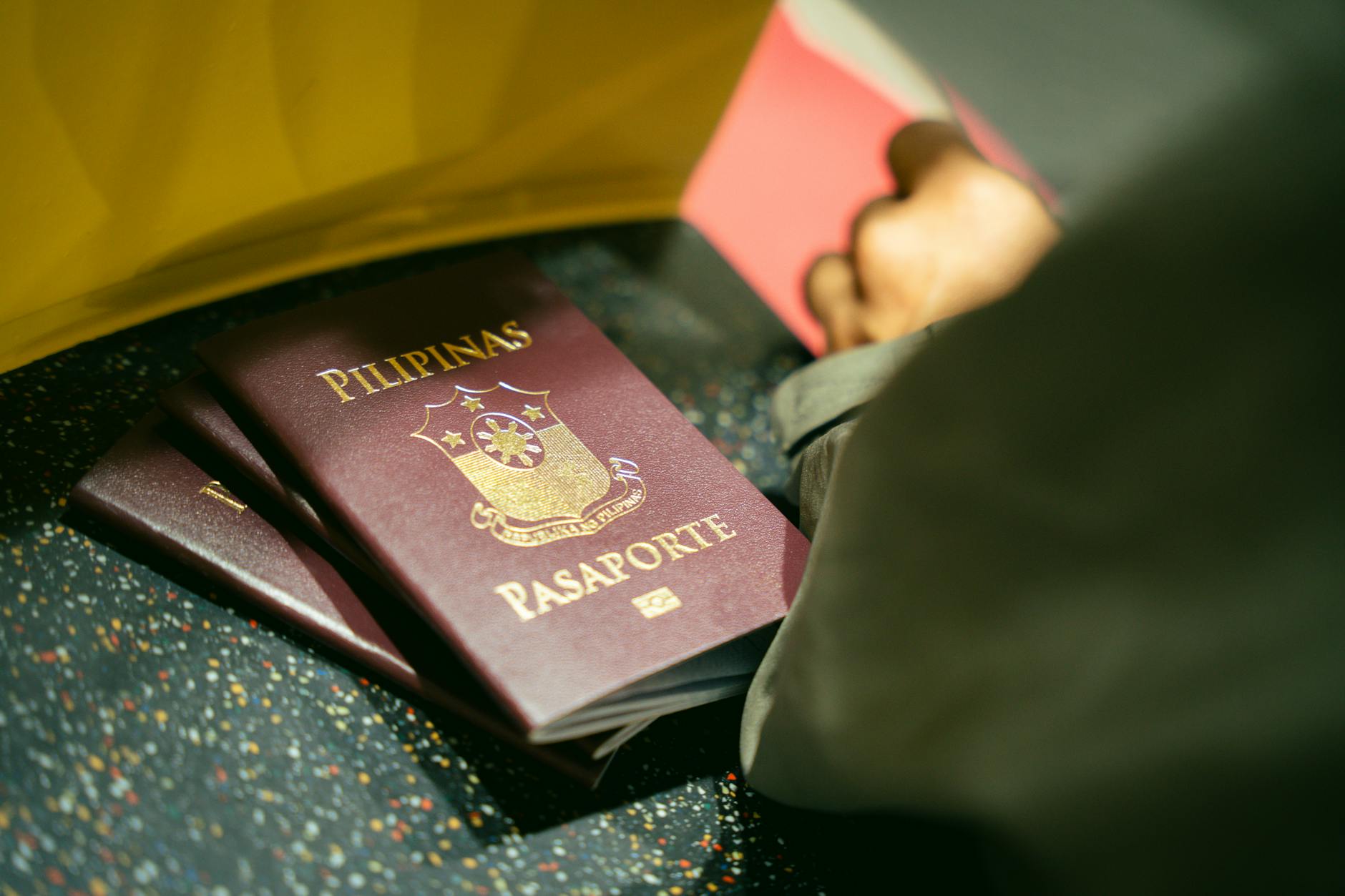
The Immigration Department allows Hong Kong permanent residents to apply for a replacement identity card within one year before expiry, and to apply to verify eligibility for a permanent identity card at any time. For a Chinese permanent resident planning to be away for more than 36 months, the best strategy is to submit an eligibility verification application (Form ROP145) to the Immigration Department within three months before departure, and to process any children under 18 at the same time. Since the applicant is still ordinarily resident in Hong Kong at this point, the verification process normally takes only 4 to 6 weeks; upon approval, the applicant receives a “Certificate of Eligibility for Hong Kong Permanent Identity Card”, which serves as strong supporting evidence when later renewing the HKSAR passport and the Home Return Permit. The certificate has no rigid statutory upper limit on validity, but in practice the Immigration Department treats it as valid within 5 years. Combined with replacing the adult’s smart identity card before departure, the new card’s expiry date will be extended beyond 2030, sparing one the trouble of card replacement throughout the entire overseas period.
As for the HKSAR passport, if the applicant expects to reside overseas for no more than 5 years, they may choose to submit a renewal application in advance by “overseas postal means” before departure, providing a Hong Kong correspondence address, and once the new passport is issued, having friends or relatives in Hong Kong collect it and post it overseas. The Immigration Department permits an HKSAR passport with a maximum validity of 10 years (for those aged 16 and above); seizing the moment to obtain a brand-new 10-year passport just before departure pushes the document issue to after return. As for the Home Return Permit, because it must be processed in person in Hong Kong, it is advisable to apply for a replacement within 6 months before final departure, after completing the eligibility verification, so as to obtain the longest validity.
For non-Chinese permanent residents, the strategic focus is entirely different. They cannot rely on “pre-emptive renewal” to avoid the 36-month deadline, because the right of abode genuinely evaporates with time. The response is to arrange, before the expected absence reaches 30 months, a “rebuild ordinary residence” trip back to Hong Kong of no less than 14 days, and to leave ample evidence; at the same time, submitting a “departure declaration” to the Immigration Department upon leaving Hong Kong is not mandatory, but it is more important to retain the entry label and related documents from that return visit. Should one be unable to return as planned while overseas for any reason, they should immediately consult the Immigration Department or a legal professional to assess whether an exemption can be sought on special grounds (such as overseas medical treatment or pandemic restrictions); however, this exemption threshold is extremely high, and successful cases are rare.
VI. Post-Return Restoration Procedures and Administrative Hurdles
If the loss of right of abode has unfortunately already been triggered, a former non-Chinese permanent resident still has a glimmer of hope: returning to Hong Kong to settle and restarting the seven-year count, or applying to restore the right of abode where conditions are met; whereas a Chinese national must go through the “eligibility verification” administrative procedure to rebuild the document chain.
Under section 2AA of the Immigration Ordinance, a non-Chinese national may apply to the Director of Immigration to restore the right of abode, provided they can prove they have returned to Hong Kong to settle and treat Hong Kong as their only ordinary place of residence. This application requires submitting a detailed settlement plan and evidence, including proof of employment or a business plan in Hong Kong, proof of address, family arrangements and so on. The Immigration Department uses “whether residential ties with a foreign country have been severed” as the core approval criterion; the entire process can take as long as 9 to 12 months, during which the applicant may only remain in Hong Kong on a “Temporary Identity Card” (commonly known as a “walking paper”) and cannot leave the territory, imposing significant career limitations on professionals and reflecting the Director’s cautious exercise of this discretion.
For a Chinese permanent resident, even if the right of abode has not been lost, if a prolonged departure has caused all documents to expire, the first step after returning is still to go to the “Eligibility Verification” section under the Immigration Department and apply for the ROP145 verification procedure. The applicant will be required to report their global residence record for the past 7 years and submit relevant proof of residence in Hong Kong. The processing time is about 6 to 8 weeks, during which the person may live normally in Hong Kong on the strength of a confirmation letter, but cannot apply for a Home Return Permit or a new HKSAR passport before verification is completed. Particularly worth noting is that, if during the verification the Immigration Department finds that the applicant’s days of ordinary residence in Hong Kong within the past 7 years were markedly low, although this does not affect the right of abode itself, it may trigger more frequent eligibility re-reviews in future, so one must never take it lightly.
In summary, maintaining Hong Kong permanent resident status is essentially an ongoing dialogue with proof of “ordinary residence”. Non-Chinese nationals must treat the 36 months as an iron rule and construct verifiable facts of residence in Hong Kong; Chinese nationals should focus on the staggered renewal of documents and the preservation of the residence evidence chain. The risk profiles of the two differ markedly, but the strategic tone is consistent: deploy proactively and refuse passive remediation.
This article is for information reference only and does not constitute legal advice. Readers dealing with specific status matters should consult a licensed legal adviser or enquire directly with the Immigration Department.
Turn this guide into your next step
If you are comparing visa routes, budgets or timelines, email us a question. We point you to public policy sources such as the Immigration Department.