Contents
- Introduction: The Dual-Address Myth of QMAS Extension of Stay
- The Dual-Track Address System for QMAS Extension of Stay
- The Compliance Boundary Between Virtual Offices and “Establishing a Business”
- The “Ordinary Residence” Principle for Residential Addresses and the Virtual Address Trap
- The Compliance Route: Choosing Between an Actually-Leased Office and Shared Space
- Conclusion: Replacing a Gambling Mentality with a Documentary Evidence Chain
Introduction: The Dual-Address Myth of QMAS Extension of Stay
Securing approval is only the first step. To successfully obtain an extension of stay, the Immigration Department will strictly examine two core conditions: the applicant’s “ordinary residence” in Hong Kong and whether they have secured employment or established a business in the city. Both ultimately come down to one substantive question — the address. Whether it is a residence serving as evidence of habitation or a workplace where business is conducted, the Immigration Department’s demands for “substance” have tightened in recent years. Many applicants assume that renting a virtual office for a few hundred Hong Kong dollars will suffice, only to hit a wall at the extension stage. This article unpacks the specific requirements for a residence and a business address under the QMAS, and marks out the clear boundary of virtual offices in the realm of compliance.
The Dual-Track Address System for QMAS Extension of Stay
The requirements for an address differ markedly between the application stage and the extension stage of the QMAS. However, when an applicant enters the extension procedure before the expiry of their first 36 months of stay, according to the official guidance for the Quality Migrant Admission Scheme, the applicant must satisfy both tracks — the “residence requirement” and the “employment/business requirement”.
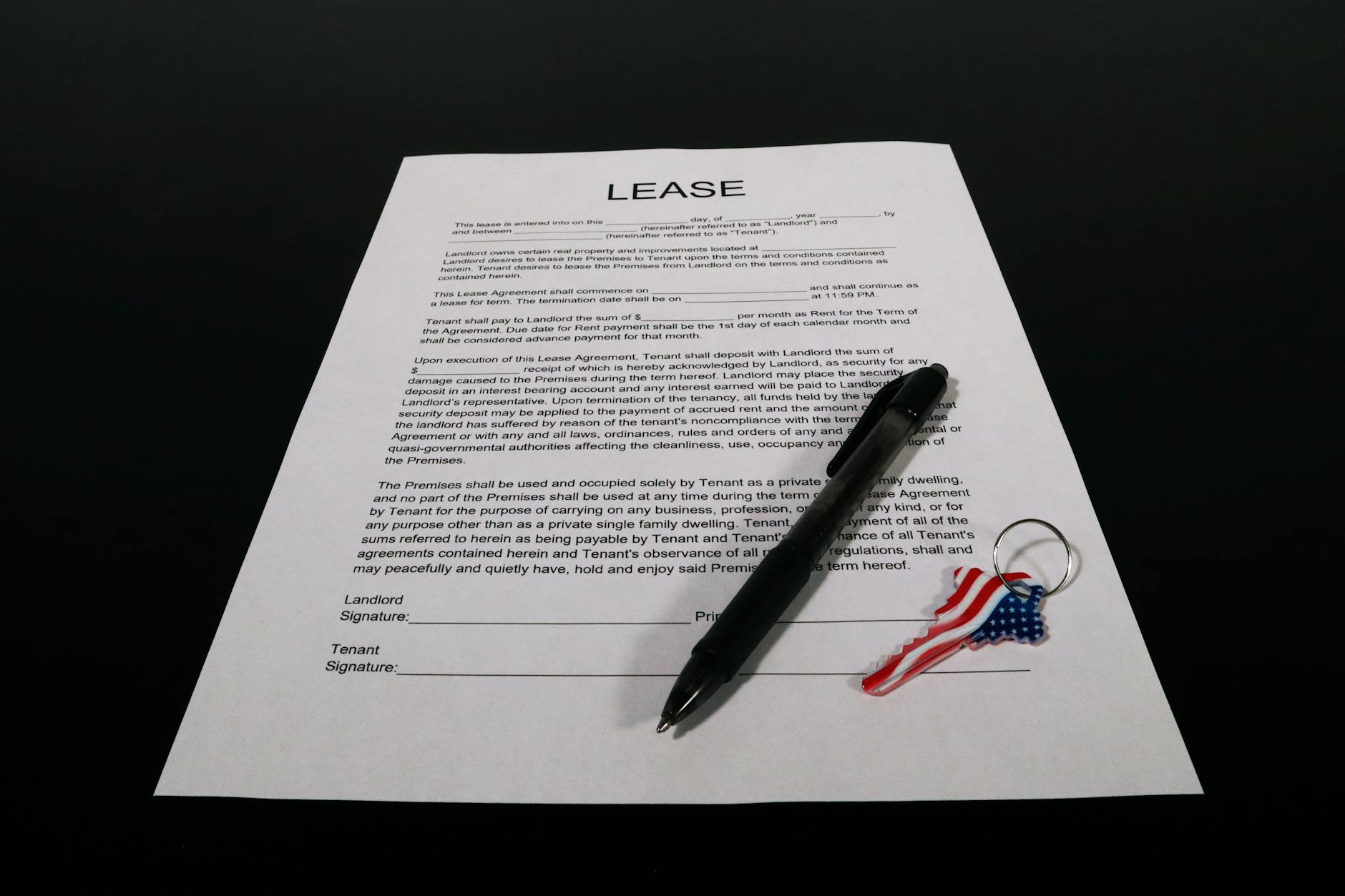
On residence, the Immigration Department will require the applicant to submit documents proving their “ordinary residence in Hong Kong”, including a Hong Kong residential tenancy agreement bearing the applicant’s name, utility bills, bank statements, tax records and the like. If the applicant is away from Hong Kong for long periods, or uses only a hotel or serviced apartment as a short-term address, lacking a stable tenancy and traces of daily life, they are easily deemed not to meet the “ordinary residence” requirement.
On business/employment, QMAS extension of stay is divided into two main routes: “employment” and “establishment of a business”. Employees must provide an employment contract, payroll records, Mandatory Provident Fund (MPF) contribution proof and similar documents. Those establishing a business must submit a full set of evidence of substantive operations, and the “actual occupation” of the office address is one of the keys to the Immigration Department’s assessment. Therefore, applicants face dual pressure to prove two addresses at the extension stage — not something that can be dismissed with a mere virtual office business card.
The Compliance Boundary Between Virtual Offices and “Establishing a Business”
Virtual offices are common in the local commercial market, with monthly fees ranging from about HK$400 to HK$2,000, providing a business address, mail collection and a secretarial forwarding service. Many entrepreneurs use a virtual office as the company’s registered address in the start-up phase, but once this logic is transported into the Immigration Department’s extension review framework, an obvious compliance gap appears.
According to the guidance on the Immigration Department’s page for applications to extend stay under the Quality Migrant Admission Scheme, when applying for an extension of stay on the ground of establishing a business, the applicant must submit “documents proving that you have established a business in Hong Kong, such as a business registration certificate, audited financial statements, office tenancy agreement, company staffing list, etc.”, and must “show that the business is genuinely operating in Hong Kong”. In the official guidance for extending stay under the QMAS, the checklist of documents evidencing the establishment of a business goes further, explicitly requiring the provision of “an office tenancy agreement and recent rent receipts, with the tenancy agreement signed by both landlord and tenant, clearly stating the company name, business address and actual occupation status”.
“Actual occupation” is precisely the red line that a virtual office cannot cross. A typical virtual office contract merely authorises the use of the address for correspondence and provides no dedicated desk, let alone staff workstations, equipment or shared utility bills. An Immigration Officer has the authority to require the applicant to supplement the submission with interior photographs of the office, conduct an on-site verification, or ask for an explanation of the daily working pattern. There have been cases where an applicant submitted only a virtual office agreement and a few receipts, and was refused an extension by the Immigration Department on the ground of “failure to prove the business is actually operating”. Knowingly making a false statement could involve Section 42 of the Immigration Ordinance, and upon conviction on indictment may result in a fine of HK$150,000 and imprisonment for 14 years.
It is worth noting that, even if a virtual office is upgraded to a “serviced office”, if the tenancy terms do not grant the applicant’s company exclusive use of a designated seat, it may still be classified as failing the “actual occupation” test. The Immigration Department’s assessment standard tends towards substance: is there an independent workstation? Are there daily commuting records? Can a formal tenancy document issued by the landlord, stating the unit’s floor area and the company’s name, be produced? Without these, a virtual office only becomes the fuse for a failed extension.
The “Ordinary Residence” Principle for Residential Addresses and the Virtual Address Trap
If a virtual office can still find a registered use in commerce, a virtual residential address has almost no compliance space under immigration regulations. The Immigration Department’s explanation of “ordinary residence” on its page on verifying eligibility for a permanent identity card forms the basic framework for the residence review in QMAS extension: the applicant must have “a habitual residence in Hong Kong”, and that residence must be “owned or rented by themselves or their family for long-term residential use”. Even if an applicant extends their stay via the “establishing a business in Hong Kong” route, if they have been away from Hong Kong for too long, or cannot provide evidence of genuine residence, the Immigration Department may still refuse the extension application.
In Hong Kong, there was once a QMAS applicant who, having accumulated more than 180 days away from Hong Kong within the 36-month stay period, and whose declared Hong Kong address was merely a short-term bed in a co-living space, was unable to provide utility bills or a formal tenancy agreement. At the extension stage they were required to explain in detail the reasons for their absence and their Hong Kong connections, and were granted only a shorter 1-year extension of stay rather than the standard 3 years. Such cases reflect that the Immigration Department is actively refining the residence review down to “quality of residence” rather than mechanically counting days spent in Hong Kong.
Once convicted, one not only loses their residence status but also carries a criminal record. Therefore, using a “virtual address” service that provides only a postal box or business address, or borrowing someone else’s utility bills, are both high-risk behaviours. An applicant must, from 12 months before the extension, consciously build and retain an evidence chain of substantive residence: agent invoices, formal tenancy agreements, stamp duty proof, water, electricity, gas and broadband bills showing the address, and correspondence from Hong Kong banks or insurance companies, among others.
The Compliance Route: Choosing Between an Actually-Leased Office and Shared Space
Faced with the compliance uncertainty of virtual offices, a QMAS applicant who intends to extend their stay by establishing a business is advised to adopt an office solution that can provide concrete usage rights. The options on the market and their compliance strength are roughly as follows:

- Virtual office (monthly fee HK$400–1,500): provides only a business address for correspondence, does not include actual occupation, and can almost never satisfy the Immigration Department’s requirements. It is suitable only as the address registered with the Companies Registry, and should not be declared as the sole place of business.
- Serviced office (monthly fee HK$2,500–6,000): provides shared facilities within a business centre; some plans grant the user a fixed desk and a rental agreement is signed stating the periods of use. If the agreement clearly bears the company name and a dedicated desk number, and a business registration certificate printed with that address can be provided, it is more readily recognised as actual operation. However, one must ensure the tenancy terms constitute exclusive use and that the centre’s management is willing to cooperate with Immigration Department enquiries.
- Traditional lease or shared industrial-building unit (monthly fee HK$5,000–12,000): sign an independent office tenancy agreement directly with the landlord, have it stamped by the Inland Revenue Department (IRD), and pay utility charges from the company account. This option best withstands scrutiny and is also the “actual occupation” model most favoured by the Immigration Department. When submitting the extension, apart from the tenancy agreement, one may also attach interior office photographs, staff workstations and the company signboard, forming a complete evidence chain.
An applicant should decide which office option to adopt within the first 6 months of establishing the business, so as to ensure the accumulation of at least 12 months or more of actual operating records before the extension. If a shared space is chosen, be sure to obtain from the operator a dedicated rental agreement that meets the Immigration Department’s verification standards, and retain monthly rent transfer records. Some QMAS applicants adopt a transitional strategy: using a serviced office in the first year, then switching to an independent tenancy once the business is on track, and submitting documents covering both periods at the extension stage to show the trajectory of gradual business expansion — which in itself strengthens the argument that “the business is genuinely operating in Hong Kong”.
Conclusion: Replacing a Gambling Mentality with a Documentary Evidence Chain
The QMAS provides flexibility for Hong Kong to attract talent, but the review standards at the extension stage are by no means vague. Virtual offices have their place in the commercial world, yet the Immigration Department’s requirements for “actual occupation” and “genuine business operations in Hong Kong” mean they cannot on their own bear the weight of the office-address proof for a QMAS extension. Likewise, a residential address must reflect the authenticity of a “habitual residence” through a formal tenancy and household bills; any shortcut may trigger criminal liability. The signal of tightening in 2023 extension cases is already quite clear: applicants should aim for a stable evidence chain of more than 12 months, rather than hastily seeking the lowest-cost paper solution only just before expiry.
This article is for informational reference only and does not constitute legal advice. For case-specific difficulties, you should consult a professional adviser holding a practising certificate from the Law Society of Hong Kong.
Turn this guide into your next step
If you are comparing visa routes, budgets or timelines, email us a question. We point you to public policy sources such as the Immigration Department.