Contents
- Introduction
- The residence rights and basic school eligibility that a dependant visa confers
- The public school system: the allocation mechanism and the competition dependants actually face
- International schools: the definition of a non-local student and the distinctive advantage dependants enjoy
- Place prospects and strategic planning across the two pathways
- Conclusion and risk warnings
Introduction
The school place options open to the children of dependants are shaped by a double constraint: immigration status on the one hand, and Hong Kong’s education policy framework on the other. International schools and public schools operate with entirely separate entry thresholds and definitions of status. Since the 2022 Policy Address relaxed several talent schemes, the number of dependants arriving in Hong Kong has surged, driving up demand for school places — demand for international schools in particular. Not every child here as a dependant, however, can walk into any school unconditionally: the way policy draws the line between “local” and “non-local” students directly governs how international school places are distributed, while public schools rest on the right of residence and on a specific admission permission.
The residence rights and basic school eligibility that a dependant visa confers
Minor children who enter Hong Kong on a dependant visa already have, at the level of immigration policy, a lawful basis for receiving education here — but that basis is not the same thing as holding “local student” status. Under the Immigration Department’s arrangements for dependants coming to reside in Hong Kong, sponsors approved under the various talent admission schemes (including the Quality Migrant Admission Scheme (QMAS), the Admission Scheme for Mainland Talents and Professionals (ASMTP) and the Top Talent Pass Scheme (TTPS)) may apply, under current arrangements, for dependant visas for their spouses and unmarried children under 18 Dependant visa details. The terms state clearly that a dependant’s limit of stay is generally tied to that of the sponsor, and that while in Hong Kong they are free to attend any school lawfully permitted to operate. The Immigration Department’s 2023 annual report shows that more than 14,000 dependant visas were granted over the year, up about 58% on 2021; dependants under 18 accounted for more than 70% of the total — around 10,000 cases — underlining the dominance of school-age children among dependants as a whole.
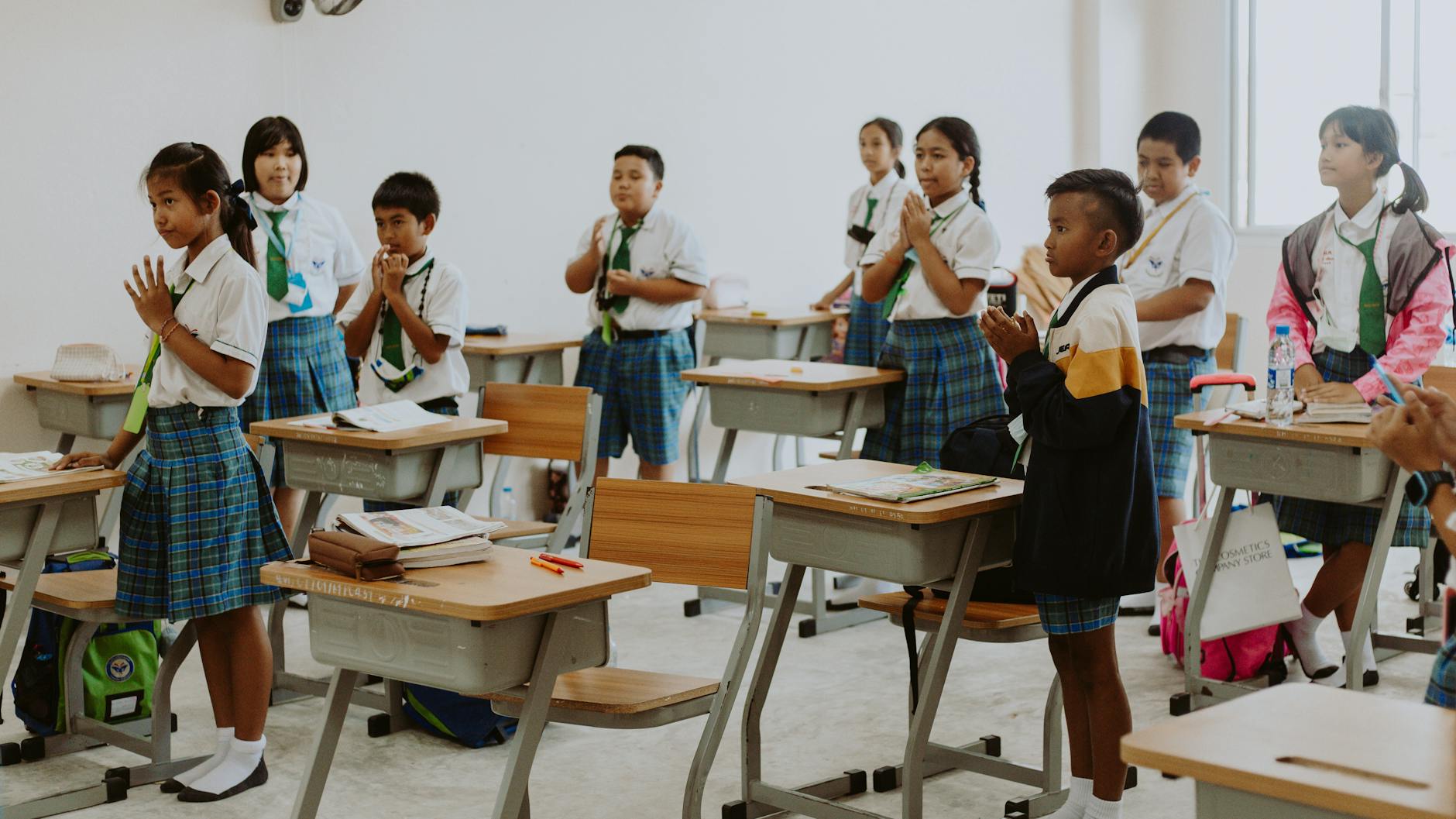
Although the visa gives schooling the green light, the Education Bureau imposes an additional administrative procedure on children “eligible for admission to public schools”. All children who do not hold a Hong Kong permanent identity card, including children here as dependants, must successfully obtain a “School Admission Letter” issued by the Education Bureau before they can enrol in a government or aided school. That letter is the official document confirming that the child may attend a mainstream school in Hong Kong; the application requires a valid travel document, the sponsor’s visa label and proof of address, among other materials, and takes about 4 to 6 weeks to process. Schools are legally barred from formally admitting a child who does not have it. In practice, however, virtually all children here as dependants are granted the letter, because their conditions of stay already satisfy the definition of a “child permitted to remain in Hong Kong” under section 74 of the Education Ordinance (Cap. 279).
The public school system: the allocation mechanism and the competition dependants actually face
Public schools (government and aided schools) offer children of dependants tuition-free basic education, but places are allocated entirely through the central allocation system, and dependant status carries no preferential treatment. At Primary One level, the Education Bureau operates the Primary One Admission System, which is divided into two stages: “Discretionary Places” and “Central Allocation” Primary One Admission System. Children here as dependants must first obtain the “School Admission Letter” described above before they can take part. In the 2024/25 school year there were around 29,000 Primary One central allocation places across Hong Kong, while application numbers remained high; in some districts — first-tier school nets such as Kowloon City School Net 41 and Hong Kong Island School Net 11 — the oversubscription ratio reached between 1.8 and 2.5 times.
Allocation outcomes for children of dependants depend entirely on the school net of their residential address, the random number and their stated school preferences, with no bonus for status. Because most families under the talent schemes cluster in middle-class districts such as Central and Western and Wan Chai on Hong Kong Island, Kowloon Tong and Tseung Kwan O, school nets in these areas have long been oversubscribed, and the average chance of securing a first-choice place through central allocation across nets is only about 38%. Those who miss the Primary One Admission System can apply for “transfer student” places, but each government and aided primary school has only single-digit transfer places a year, competition is far fiercer than under the central system, and candidates must sit written tests and interviews set by the schools themselves. In the 2023/24 school year, nearly six in ten aided primary schools across Hong Kong had no transfer places at all at Primary Two level.
At secondary level, the qualifications of children of dependants are the same under “Central Allocation” within the Secondary School Places Allocation System, but dependants who arrive only at Primary Five, or even at Secondary One, face harder transition problems. Because allocation at the senior levels relies mainly on school internal assessment results, newly arrived children are generally unable to produce recognised Hong Kong primary school records, so most can only take part in the “Central Placement” arrangement, under which the Education Bureau assigns them directly to schools with places left over — schools of highly variable quality, often in the Band 3 range. According to the Education Bureau’s 2022/23 student enrolment statistics report, the 10 government and aided secondary schools with the highest share of non-Chinese speaking or newly arrived pupils all had university admission rates below 8%.
International schools: the definition of a non-local student and the distinctive advantage dependants enjoy
The core admissions principle of the international school sector is that it exists primarily for “non-local students”, and holders of dependant visas fall squarely within that definition, giving them a structural advantage in the competition for international school places. Under the Education Ordinance (Cap. 279) and the Education Bureau’s international school admission guidelines, every international school must allocate at least 70% of its places to “non-local students” — a category that covers children holding a foreign passport, or holding a valid Hong Kong immigration visa but without Hong Kong permanent resident status International schools overview. Because children of dependants hold a non-permanent identity card and a valid dependant visa, they fully meet the non-local student definition: they compete for that 70% pool of places rather than fighting local permanent residents for the 30% that remains.
As at the 2023/24 school year, Hong Kong had 54 international schools (including the 22 schools of the English Schools Foundation (ESF)), offering around 46,000 places in total. A paper the Education Bureau submitted to the Legislative Council in August 2023 showed that the share of non-local students at international schools held steady at an average of 78%, meaning some 36,000 places were set aside for non-local students. The sharp rise in the number of children of dependants has pushed up demand for international school places directly. In the 2023/24 school year, for example, the total number of central applications to the English Schools Foundation passed 5,200 for the first time, up 24% on the previous school year; applicants holding dependant visas accounted for 31% of new applications, a record high. Competition for kindergarten and primary places at popular international schools such as Hong Kong International School (HKIS), German Swiss International School (GSIS) and Canadian International School (CDNIS) runs as high as 8:1 to 12:1, and average waiting times for a place have stretched to 14 months.
On fees, international school tuition falls outside the scope of government subsidy, and dependant families must bear the full cost. For the 2024/25 school year, median annual tuition at the primary section of international schools was HK$128,000 and at the secondary section HK$165,000, with some top schools above HK$200,000. Most international schools also charge a one-off, non-refundable capital levy or debenture, ranging from HK$50,000 to over HK$10 million, creating a significant financial threshold. Even so, children of dependants are not bound by the allocation mechanism: they can apply to several international schools at once and secure admission through each school’s own assessments (interviews, aptitude tests), giving them far more flexibility than in the public system.
It is worth noting that if a child here as a dependant has lived in Hong Kong for seven years and obtained Hong Kong permanent resident status, their status for international school admission switches from “non-local student” to “local student”, and if they then stay on at an international school they come under the 30% local student quota. If the school’s local student proportion is already full, that may affect the renewal of the student’s place — a policy turning point that many dependant families overlook when planning a long stay in Hong Kong.
Place prospects and strategic planning across the two pathways
Choosing a school for a child here as a dependant is essentially a trade-off between “public allocation, low certainty but zero tuition” and “international education, high certainty but expensive”. Working from the timing and status milestones, three strategic routes can be mapped out.
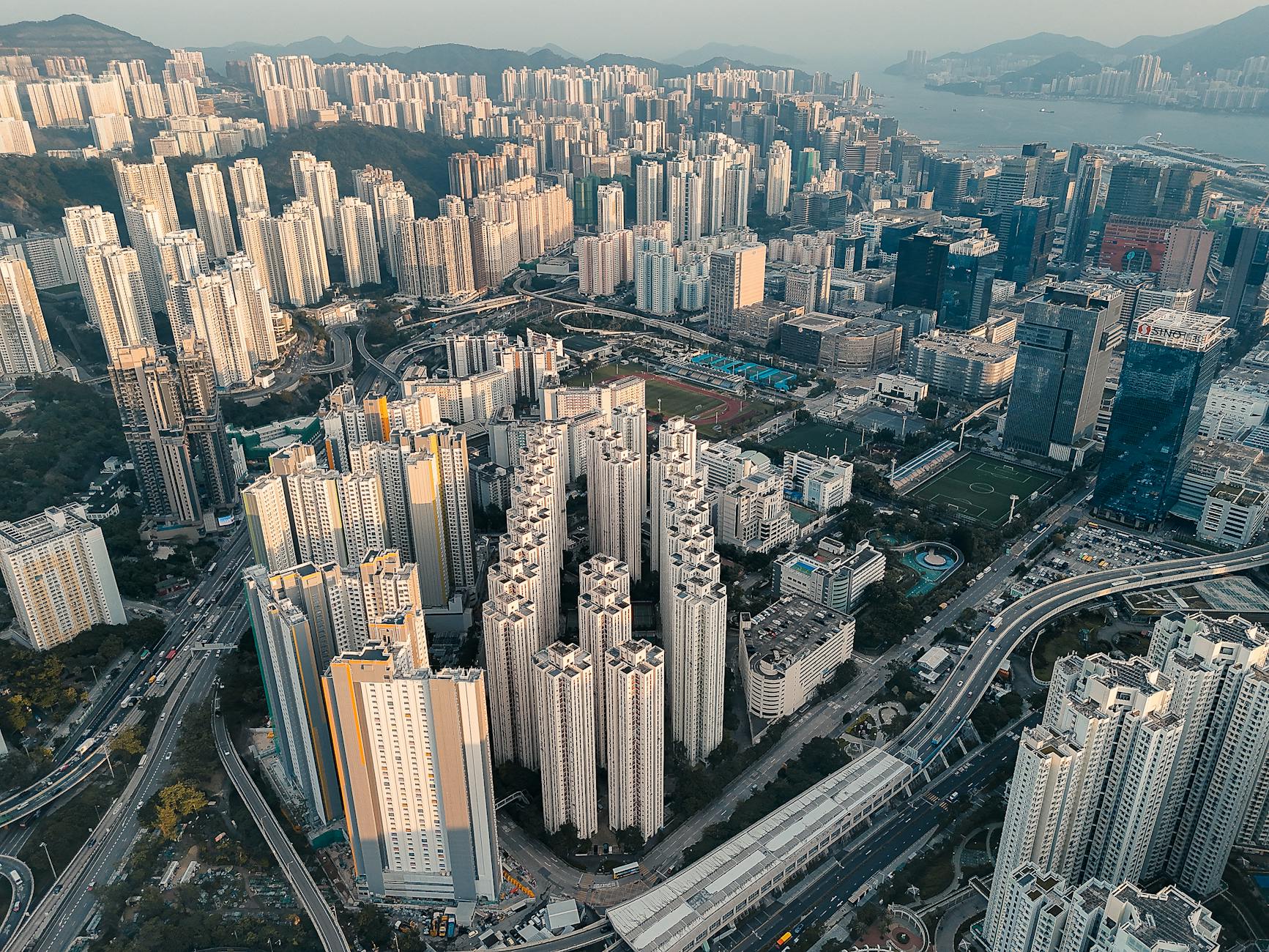
Route one: lock in an international school at kindergarten or primary level, then consider moving back into an elite public school at secondary level, depending on finances and on any change in status. This suits families with ample means whose sponsor expects to remain in Hong Kong for more than seven years. Because the supply of non-local student quota places at international schools is relatively abundant, and because schools admit students on their own authority, children of dependants can sidestep the uncertainty of public allocation. But families should set aside at least HK$1.5 million to cover tuition and capital costs from primary through to junior secondary, and begin the application process 12 to 18 months ahead: the ESF “central application”, for example, closes for priority K1 interviews in September each year, and places fill with great speed.
Route two: commit fully to the public school system, using the School Admission Letter and the allocation mechanism, at the price of living with competition in the school net and a possibly disappointing allocation. This route suits families with tighter finances or a determination to integrate into the local education system. The key point is that the earlier the child arrives, the better — so that they can take full part in the Primary One Admission System and the internal assessment regime. If a child enters by transfer after Primary Three, families should reserve extra academic support resources to offset the disadvantage of having no internal assessment results at allocation time; according to Education Bureau figures, of the students admitted to government and aided primary schools through the “transfer student” mechanism over the past three school years, only about 23% went on to secondary school at the same school.
Route three: the mixed route — attend an international school at primary level, then apply for a discretionary place at a government or aided secondary school once permanent resident status is obtained, thereby saving part of the senior secondary tuition. This requires careful assessment of secondary place supply and of the timing gap that opens up during the change of status: permanent resident status requires seven years of residence in Hong Kong, and if the child switches tracks at secondary level they may face problems of curriculum continuity and of differences in schools’ admission standards.
Whichever route is chosen, dependant families must keep close track of the Education Bureau’s “admission arrangements for non-local children” and of the Immigration Department’s visa extension rules. Once the sponsor’s employment visa ends, the dependant visa lapses with it, the child loses their eligibility to study in Hong Kong, and the school they are attending must withdraw them immediately. Between 2022 and 2023, the Immigration Department cancelled 427 dependant visas in consequence of a sponsor leaving Hong Kong or a visa coming to an end, and 61% of these involved children who were in school.
Conclusion and risk warnings
Dependant status gives children a lawful route to choose between public and international schools in Hong Kong, but the policy logic behind the two is entirely different: public schools allocate places by right of residence and random allocation, while international schools use the non-local student quota to create a dedicated entry space for dependants — at the price of high tuition. Before choosing a school, families are well advised to treat the stability of the sponsor’s length of residence, the household budget and the child’s educational goals as three core considerations, and to start the application process early. This article is for information only and does not constitute legal advice. Any specific question about visa extension or a School Admission Letter should be directed to the Immigration Department or the Education Bureau, and to licensed professionals.
Turn this guide into your next step
If you are comparing visa routes, budgets or timelines, email us a question. We point you to public policy sources such as the Immigration Department.